School district’s plan to build new Rose Hill/Stella Schola Middle School near pipelines causes concern
Published 2:36 pm Thursday, April 14, 2011
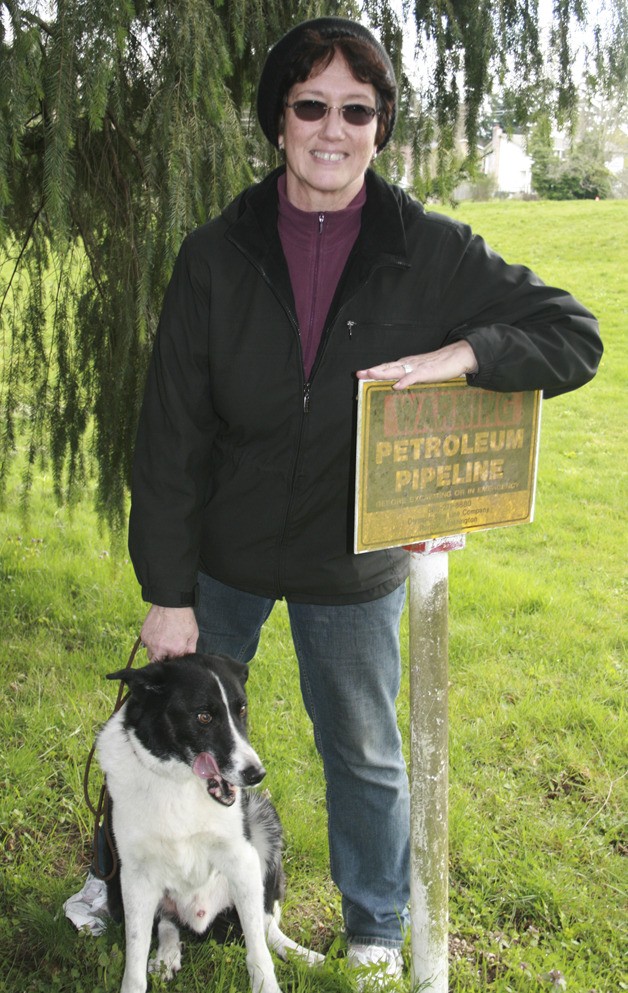
Longtime Redmond resident Greyling Gentry questions why the Lake Washington School District (LWSD) wants to build a new school near what she calls “ticking time bombs.”
Gentry is the most vocal opponent against the district’s plans to build a new Rose Hill/Stella Schola Middle School on the existing school grounds a few hundred feet away from where a pair of nearly 50-year-old gas pipelines are buried. LWSD is proposing to build a new two-story, 125,000 square-foot school in the southwest corner of the property, south of the existing school. If approved by the City of Redmond, construction is slated to begin in 2012 and the new school will be open by September 2013, according to the plans.

The district held a pair of community meetings about the new project last week, but attracted a small turnout, so the district is planning to hold another community meeting, where residents can see the proposed plans, ask questions about the project and voice concerns. The date and time of the meeting are still to be determined, according to Kathryn Reith, communications director for LWSD.
Gentry, who lives right behind the school, is concerned that the 46-year-old pipelines running underneath the eastern edge of the Rose Hill property could rupture during or after construction and threaten the lives of school children. She said the district should not be allowed to build on the property, especially since there will be about 250 more students enrolled once the new combined school opens.
Gentry said she would rather see the property turned into a park or open space and have the new school be built at a different location. Gentry said several of her neighbors are also against the district’s proposed plans.
Reith said Gentry has a legitimate concern, but quickly pointed out that the new school plan calls for a number of additional safety features not present in the existing school.
“We need to take the time with the city and pipeline company to make sure all safety precautions are taken,” Reith said.
The pipelines, which measure 16 inches and 20 inches in diameter, are part of a 400-mile long system that is owned by Olympic Pipe Line Company, which is operated by BP Pipelines North America. The pipeline system runs from Ferndale, Wash. to Portland, Ore. and in 1999, three youths died as a result of a rupture along the pipeline in Bellingham.
“When these pipelines go, they take out huge portions of land,” Gentry said. “Why would you force kids to be close to these ticking time bombs?”
Washington Utilities and Transportation Commission (UTC) is the agency responsible for inspecting pipelines throughout the state.
The Olympic Pipe Line is divided into two parts — north and south — with each section being inspected in alternating years, according to UTC executive director Joe Subsits.
The next inspection for Olympic North, which includes the section that runs through Redmond, will be next year, said Subsits, adding that the Olympic Pipe Line Company runs its own “in-line inspection tools every five years.”
UTC last inspected Olympic North last year and Subsits said he does not “recall any violations associated with this inspection.” Olympic North’s inspection documentation can found here.
Subsits said concerns about underground pipelines are legitimate, saying, “as long as pipelines are in the ground they pose a risk. The probability of something happening at a specified location is very low. … People are safer when they aware of the conditions which could impact them. An awareness of pipeline location and hazards goes a long way towards reducing risk.”
BP Pipelines, which operates the Olympic Pipe Line, is “tested and inspected to a very high standard,” according to Pam Brady, right-of-way specialist for BP Pipelines. BP flies over the pipeline every week to make sure there is no unknown development or digging going on, Brady said.
For more than year, BP has been working the LWSD to make sure that any digging or other construction at the site will not cause damage to the pipeline, Brady said.
“We feel very comfortable with the work that is going to go on there,” Brady said of the proposed new school. “We have no concerns from a pipeline safety point of view. We’ve been working with them and seen their drawings and we continue to work with them. At this point we have no cause for concern.”
ORDINANCE CREATED
In response to the pipeline disaster in Bellingham, the Redmond Fire Department established a response plan in the event of a pipeline failure in 2000. Two years later, Redmond City Council adopted Ordinance 2136, which added a “Hazardous Liquid Pipelines” section to the utilities chapter of the Redmond Comprehensive Plan.
The ordinance, among other provisions, prohibits new “high consequence land uses,” which is described in the ordinance as “high-density on-site populations that cannot be evacuated or protected in the event of the a pipeline failure.”
Gentry said she feels that building a new Rose Hill Middle School falls under the new high consequence land use. The ordinance even says that a school is an example of a high consequence land use.
But the proposed $49.2 million modernization project for Rose Hill/Stella Schola Middle School, which was originally constructed in 1969, is in compliance with Ordinance 2136 because the high consequence land use is already in place, according to Steven Fischer, senior planner for the City of Redmond.
“The land use is already there,” Fischer said. “The land use being the school.”
Fischer said the school is not a new land use so it is allowed to be expanded, but the proposed expansion project must “be designed to avoid increasing the level of risk in the event of a pipeline failure and where feasible, reduce the risk,” according to the ordinance.
In other words, the district has to add more safety features to the new school, which are part of the plans, according to Michael Romero, the project manager of the expansion project.
The new building will have fire sprinklers and the gym, which is closest to the pipeline, will be double-wall construction, both of which are not the case in the existing building, Romero said.
The new school plans call for the school to be about 300 feet from the pipeline at its closest point, which is 60-65 feet farther away from the pipeline than the existing school, Romero said, adding that the “classroom wings are the farthest away from the pipeline.”
‘DANGEROUS LOOPHOLE’
Fischer admits that if an existing school was not already on the property near the pipeline, a new school would be prohibited from being built, according to Ordinance 2136, but the school was already there, therefore there is no new land use, so the modernization plans are in compliance.
Gentry is upset the new school is being allowed under the ordinance’s provision, calling it a “dangerous loophole in the law,” which sacrifices “children safety.”
“They say they are not building a new school, they are extending an existing land use,” Gentry said. “I don’t agree. This is a new school.”
And in her eyes, a new school means a new high consequence land use, which is prohibited at that site under the conditions of Ordinance 2136.
Gentry is also concerned about the projected increase in enrollment at the new Rose Hill Junior High/Stella Schola School with the pipeline posing a risk to even more kids.
According to October 2010 enrollment numbers there are nearly 600 kids who attend both Rose Hill and Stella Schola, a choice school that is housed in adjacent portables. The Stella Schola students will be housed with Rose Hill students once the new school opens in 2013 and the projected enrollment for that year for the combined schools is around 820, Reith said. Two big reasons for the increase in enrollment is the feeder pattern changes and the fact the district will change to a K-5, 6-8, 9-12 grade configuration, Reith said.
COLLABORATIVE EFFORT
Fischer, along with city officials from the fire, public works, planning and building departments, met with LWSD and BP officials on Monday to discuss safety plans for the project during construction.
The plan is to determine the exact location of the pipeline, build a temporary fence around it during construction so the contractor knows where the safe zone is at all times, Fischer said.
Fischer said BP will have input on what sort of conditions will be placed on the LWSD’s Conditional Use Permit (CUP), which is the first key step in the permitting process. The district has also been working with the city and BP to make sure its CUP meets all guidelines, Fischer said.
Fisher said he anticipates the district to submit its CUP by the end of the month or early May. From there, the city will hold public hearings and then the hearing examiner will submit a recommendation to city council, which will have final approval of the project, Fischer said.
While the collaborative effort is a smart move, Gentry said it’s hard to trust BP, a company that has had its share of public relations disasters.
“This is BP, for goodness sake,” she said. “When the district says, don’t worry we are working with the pipeline owner, I’m supposed to trust you and you are supposed to trust them. I don’t think so.”
Subsits, the UTC executive director, said BP “has done an excellent job maintaining the Olympic system since they took responsibility for system operation after the Bellingham accident. Because of the Bellingham accident, a tighter maintenance standard was adopted. When comparing this system to others they are further ahead in their integrity work.”