Eye-opening experience in Cuba: Redmond High students, teachers and parents interact with Havana locals on educational trip
Published 2:57 pm Friday, April 24, 2015
Relations between the United States and Cuba have generated top news stories recently, with New York Gov. Andrew Cuomo visiting the Communist island nation on a trade mission, President Barack Obama removing Cuba from the list of state sponsors of terrorism and lawmakers pushing to end the 54-year-old trade embargo.
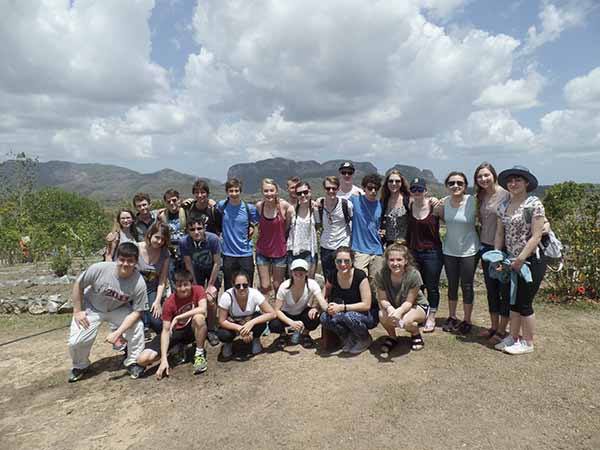
Earlier this month, a group of 24 Redmond High School (RHS) students, four teachers and six parents traveled to Cuba, as well, and interacted with the citizens of Havana and visited schools, arts and music centers, the only English bookstore/salon in Cuba and agricultural/organic farms.
The travelers — who paid for the trip themselves — flew out of Seattle on April 3, stayed one night in Miami and spent April 5-12 in a Havana hotel. They arranged the trip through student-travel organization Explorica, which obtained Visas and registered the trip with the United States government. The group’s activities had to be approved and two tour guides were on hand, one from Cuba and one from the United States, the latter which took notes and made sure the group stuck to its plan.
It was a once-in-a-lifetime, eye-opening experience, said junior Olivia Lang, who was impressed with the culture and how open and caring the people are.
“At first, when I heard about the trip, I thought, ‘This is so cool,’ since everyone’s always told me I’m never going to go to Cuba, because it was this locked off (nation). There was an embargo, a ‘wall’ up,” Lang said. “I got to see that they have so much life and soul in them, and their political situation with the Communist government really doesn’t affect them as much as you think it would. They’re still so happy and they still have so much to give the world.”
Added freshman Claire Lynch about what she learned from the Cuban people, especially the artists: “To be passionate about what you do and put your character into what you do, just to show who you are in as many ways as possible.”
RHS group leader and Spanish teacher Jill Samppala visited Cuba in 2001 as a college student on an educational Visa. It was a memorable trip for her and she felt her students would benefit from a visit, which marked the 11th international educational trip that Samppala has led with either RHS or Redmond Junior High students along for the ride. Other trips were to Costa Rica six times and Europe four times.
Samppala said the purpose of the people-to-people exchange was for her students to hear about the Cubans’ experiences, what their struggles are, what they enjoy and what they love. Students danced with them and asked them questions — it wasn’t a typical tourist trip where visitors observe from a distance.

Since there was no cell-phone service and no Internet connection where they were staying, Samppala smiles when she notes that dinners were special since everyone was talking to one another instead of peeking at their media devices.
Junior Faylynn Busby enjoyed being accepted by the locals and being welcomed into people’s homes for dinner and conversation, both in Spanish and English.
“I thought that was really amazing to open your house up to strangers,” said Busby of the 30-plus RHS crew that sat down for meals. Busby even brought home a vegetable-based soup recipe. “They seemed so happy to convey this information to me.”
Sophomore Logan Warrnier was impressed with the group’s upbeat Cuban tour guide, who always relayed detailed answers about the architecture and paintings they noticed on their way around Havana.
Warriner also went on solo walks and chatted up the locals.
“Most of them were just interested in music that we listen to here in America. They didn’t really care about the politics at all … just the culture and the music, what Seattle’s like,” Warriner said.
From grand-scale building renovations to striking sunsets, senior Aedan Lynch soaked up everything he strolled across in Havana.
“It feels like you’re walking in on the beginning of some huge process. You can walk around in Havana and see all these projects being done and you can see all these things being changed. It’s not like a construction site here in Redmond (with new apartments being built), you’re walking in on something a bit bigger,” he said.
On the sunset front, Lynch said that when the sun hit the horizon at just the right angle, he and others could suddenly see the entire rainbow in the sky. The shades of blue especially stood out, colors that are usually found in an ocean.
As she spoke with the locals each day, sophomore Paige Lui appreciated the way the Cubans are not focused on their individual matters, but how things affect the entire community.
“(That) is something that I think that we should learn to think more like here in the U.S. How can we help other people advance, as well?” Lui said.
While Lui feels that ending the embargo would benefit Cuba’s economy, she’s worried about what it could do to the nation’s culture.
“When Westernized countries go into another country, it sort of ends up with a McDonald’s and a Starbucks everywhere and that’s not really what I hope people want to see from Cuba,” she said. “I hope they want to go there and see the original culture, see these people who are so welcoming and so excited for this. And I hope that they see them as they are rather than as what we make them with tourism.”
For Samppala, stepping back onto Cuban soil not only took her back 14 years to her first trip there, but also gave her a glimpse into an improved Cuba. She is impressed by how resilient the Cubans are by persevering and pushing through hard times.
“I’ve seen that Cuba is a changing country and that the people are slowly gaining more freedoms from what I saw when I was there in 2001,” she said. “They genuinely want to have an open relationship with the United States, because it’s only going to help their economy for them to be able to trade with us. They are open to change in their future.”