
Valley Cities receives federal certification
Published 10:00 am Friday, July 3, 2026
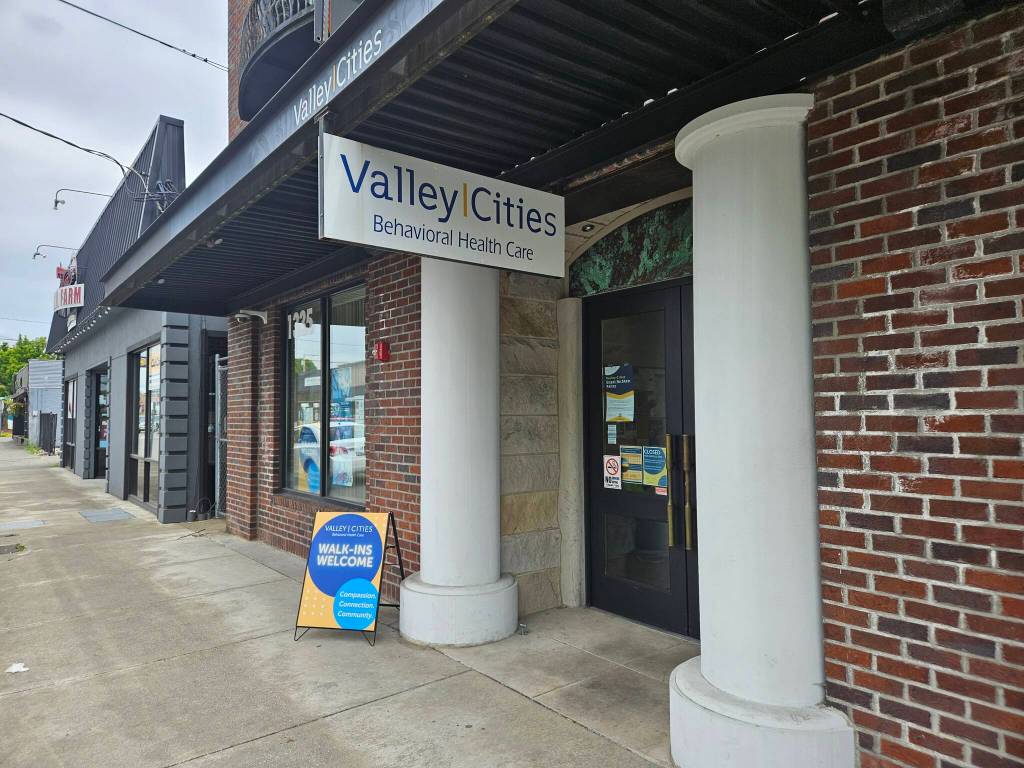
Valley Cities Behavioral Health has a new mandate: to care for every patient that walks through its doors, regardless of their ability to pay.
The health provider announced in June that it had been designated a Certified Community Behavioral Health Clinic by the state of Washington and the federal Substance Abuse and Mental Health Services Administration.
With that new designation comes new responsibilities, but also a way to financially afford to carry them out through a prospective payment system with insurance providers.
Before being certified, Valley Cities operated under a traditional fee-for-service model, which means patients pay health care providers a fee for a service, regardless of the outcome. If patients have insurance, then health care providers are reimbursed by the insurance provider for services rendered.
But some services that Valley Cities provides are not always totally, or even partially, reimbursed by insurance, especially Medicaid.
“Under fee-for-service, services like peer support, care coordination, and crisis intervention are often poorly reimbursed or not reimbursed at all — creating a financial disincentive to provide the comprehensive, community-integrated care that people with substance use disorders actually need,” Valley Cities CEO Shekh Ali said in an email interview. “This means that even when Valley Cities’ clinical teams know exactly what a client needs — a peer recovery coach, a care coordinator following them through detox and into outpatient treatment, 24-hour crisis response — the organization often cannot be adequately compensated for providing it.”
But with the Certified Community Behavioral Health Clinic designation, Valley Cities can switch to a prospective payment system (PPS).
Switching to this new payment system, which determines the cost of care in advance, will be invisible to patients.
“What clients will notice is an expansion of what’s available to them,” Ali said. “Nearly all clinics that became CCBHCs hired additional staff — particularly nurses, substance use disorder specialists, case managers, and peer specialists — and 84% expanded services; 63% added some type of mental health or substance use service, 55% added psychiatric rehabilitation services, 51% added crisis services, and 46% added medication-assisted treatment for alcohol or opioids.
“In other words, the PPS funds the services themselves — which means clients gain access to more coordinated, comprehensive care without facing new costs to receive it,” she added.
This is critical for Valley Cities to be able to continue its myriad services, including its nationally-recognized Recovery Place Seattle and our Acute Detox and Inpatient Intensive services.
“Critically, the PPS is what makes that mandate financially sustainable. The mandate to serve all patients regardless of ability to pay, combined with funding that supports that mandate, enables organizations to expand access without absorbing uncompensated losses,” Ali said. “[… ] Previously, serving uninsured or underinsured clients at scale meant Valley Cities absorbed significant uncompensated costs. The cost-based PPS is structured to account for the full cost of delivering care across the entire population we serve — including those who cannot pay.
“When I say we are ready to meet that responsibility on behalf of every person in King County, I mean it in both the clinical and the fiscal sense,” she continued.
Valley Cities received the certified status because it was able to meet stringent standards set by the Substance Abuse and Mental Health Services Administration (SAMHSA), including how the health care provider provides 24/7 crisis access and same-day intake, coordinate care plans with other health providers, provide quality and data reports, be appropriately staffed, employ or contract with certified substance use treatment specialists, and more.
“For Valley Cities, this was not a light lift. It required a comprehensive community needs assessment, investment in our electronic health record infrastructure for quality reporting, establishment of formal agreements with designated collaborating organizations, and alignment of our existing programs — including Recovery Place Seattle and Kent along with our crisis continuum — with the nine federal service requirements,” Ali said. “Achieving this designation is a testament to the depth of our clinical infrastructure and the quality of our team.”
Valley Cities will be transitioning to become a Certified Community Behavioral Health Clinic by January 2027.
After that, the health care provider will begin offering a sliding scale fee for individuals who are uninsured or underinsured.
“For people experiencing homelessness, poverty, or involvement in the criminal justice system — populations we see regularly across South King County — this designation means Valley Cities now has a sustainable financial platform to meet them where they are, without having to choose between serving them and keeping the lights on,” Ali said.
Valley Cities has locations in Enumclaw, Auburn, Federal Way, Kent, Des Moines, Renton, and Seattle.
For more information, head to valleycities.org.