Nature Vision receives SETAC award for environmental education
Published 12:00 pm Friday, October 14, 2016
Next month, the Society of Environmental Toxicology and Chemistry (SETAC) will recognize Nature Vision for its contributions to environmental education.
Those contributions include a preschool program out of Farrel-McWhirter Farm Park in Redmond. In addition, the Woodinville-based nonprofit has school programs in 18 school districts throughout King County, including Lake Washington School District (LWSD), as well as a few school districts in Snohomish and Pierce counties.
“It’s an exciting moment for us,” said Nature Vision executive director Ginny Ballard about the recognition.
She said as a small organization — which has been growing slowly and sustainably — to be recognized by a global organization such as SETAC is a big deal. Nature Vision was notified about a month ago that it will receive the SETAC/Menzie Environmental Education Award at the SETAC North America 37th annual meeting on Nov. 6 in Orlando, Fla.
“We’re really honored to have this opportunity,” Ballard said.
SETAC is a not-for-profit, worldwide professional organization made up of nearly 6,000 individuals and institutions in 100 countries. According to a SETAC press release, they are dedicated to the study, analysis and solution of environmental problems, the management and regulation of natural resources, research and development and environmental education. The society’s mission is to support the development of principles and practices for protection, enhancement and management of sustainable environmental quality and ecosystem integrity.
The award Nature Vision is receiving requires the recipient to make significant contributions to environmental education either through educating other educators or by working with community groups and K-12 programs.
SETAC global executive director Charles Menzie’s family sponsors the award.
He said the award switches back and forth between individual educators and organizations that have a positive influence on young students.
“Nature Vision provides a connection to the natural world and that is key to building the necessary awareness in students that will lead to consideration of the natural world as part of their everyday life,” Menzie said. “I did projects in urban areas and this kind of bridging is at the heart of good environmental education.”
Menzie added that his family’s award continues a long history of SETAC’s recognition of educators that began in 1991. He said his family has requested that the award be renamed in honor of Stephen Klaine, a past recipient who passed away earlier this year and is recognized as one of the outstanding leaders in environmental education.
The winner receives a cash award, a plaque and public recognition.
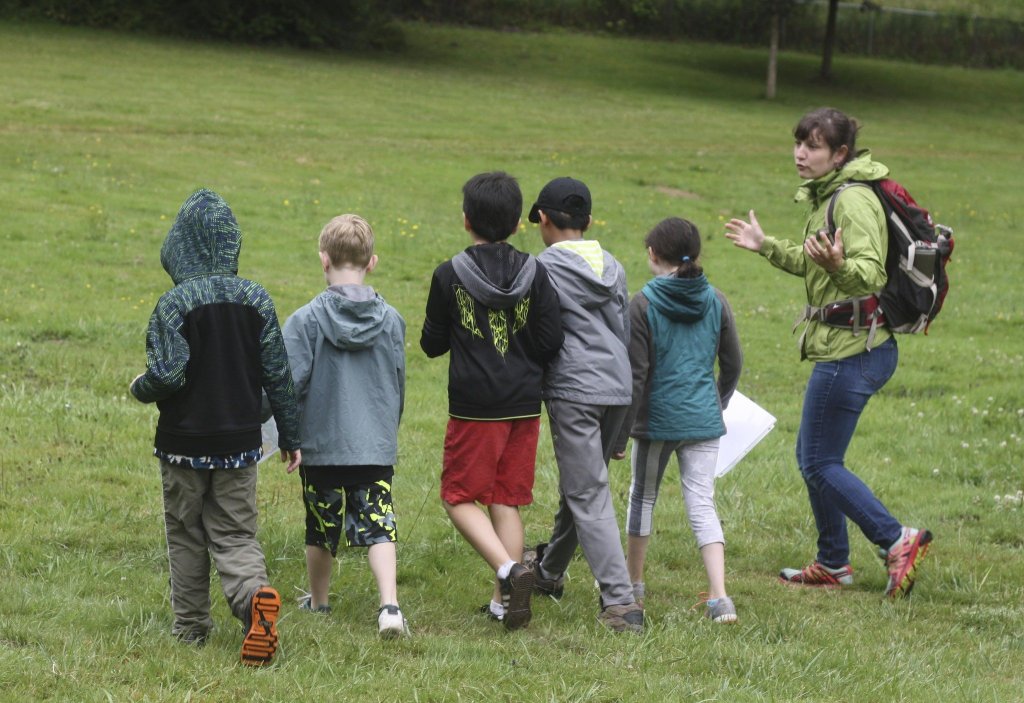
Ballard said Nature Vision works with more than 65,000 pre-kindergarten through 12th grade students a year. They work in the classrooms as well as in local green spaces.
At Farrel-McWhirter, Nature Vision has three preschool programs for 3-and-a-half to 5-year-olds: Creative Play, Preschool Adventures and Pre-K Discoveries. The nature-based preschool classes are 50 percent indoors and 50 percent outdoors. Ballard said with a garden, farm animals and more onsite, students interact with the environment at the park.
According to the Nature Vision website, the organization’s schools programs teach students about a range of topics, including ecosystems, interdependence, biodiversity and various habitats. The programs also offer students the opportunity to complete “a stewardship project in their community related to watershed health, such as invasive plant removal, native plant restoration, planting water-wise gardens, finding and fixing leaks, and much more.” Nature Vision also runs nature-themed summer camps.
In addition to working with schools, districts and PTSAs, Nature Vision partners with organizations and agencies such as the Cascade Water Alliance to provide educational enrichment.
Ballard said there can always be more to a school or district’s science programs. Nature Vision does this in real ways, making conservation relevant to the students so collectively, everyone can make a difference in the long term.
Nature Vision originally began as a program with King County, but after budget cuts in 2002, Ballard said it became a nonprofit.
According to the press release, Nature Vision “believes that exposure to nature and environmental science at a young age will foster future stewards.”
The SETAC award that Nature Vision is receiving focuses on programs that enhance environmental literacy and awareness in youth, K-12 and the community.
In the release, a National Board-certified teacher said, “Nature Vision has been instrumental in giving our students not only a conservation knowledge base, but also empowering them to make positive changes in our community.”