
Author spurs ‘Creativity in Motion’ through books
Published 4:50 pm Thursday, August 29, 2013
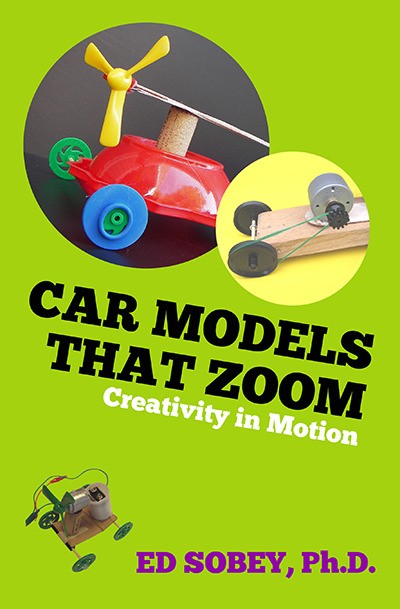
While working at the National Inventors Hall of Fame, Ed Sobey met individuals who gave the world a number of great inventions including the MRI, CT scan and the lens for the electron microscope.
Through these meetings, the Redmond resident wanted to figure out what made them successful. He didn’t think he would find one single thing all the inventors shared. But he did.
“Right away, I found a common element,” Sobey said. “They all had the opportunity to mess around in a shop or laboratory.”
He said in an environment where people can play around, experiment, make mistakes and recover without it hurting their career, they gain the self-confidence to continue with what they are doing — potentially coming up with the next big thing.
Sobey wanted to give students this same opportunity, so for 17 years, he has held hands-on, open-ended workshops for teachers and students in which they can stretch their creative muscles.
Sobey, who has also worked as a science museum director, has compiled the most popular activities from his workshops in a new book called “Car Models that Zoom — Creativity in Motion.” This is the first book in a “Creativity in Motion” series he is working on for kids. “Car Models” is now available on Amazon.com.
 Sobey (left) described the books in the upcoming series as a launchpad rather than a cookbook, meaning it will give kids an idea of how to build car model prototypes but not a detailed step-by-step procedural on the process.
He has visited schools in 25 countries ranging from aboriginal schools in Australia to schools for gifted students to students at university. With the school-aged students, Sobey said his workshops are usually for third through fifth graders while the university-aged students are at the graduate level.
During his workshops, like in the book, Sobey will give students an idea of what to do — such as building a prototype of a car — a bunch of parts and then step back and let them explore and experiment.
“Let’s see what you can discover,” is what he likes to tell the students, hoping they will come up with something he has never seen.
He said it doesn’t matter what age the students are, they all make the same mistakes. For the elementary-aged students, the workshops expose them to focused learning in science, and for the university students, it solidifies what they already know.
“It’s a very encouraging environment,” Sobey said. “Everybody’s engaged…learning is maximized. Teaching is minimized.”
He compared the way science is taught to how physical education is taught. Sobey said in physical education, there are no lectures and students spend most of the class doing some sort of activity. In science, there is typically a lot of lecturing even though that part doesn’t matter as much as what is done with the information, just like in physical education.
Sobey said with all of the experimenting, his workshops are total chaos and he loves when he sees the students begin to understand more of what they are doing and the joy that comes with that as excitement erupts throughout the classroom.
“That moment of glee,” he said, “is the thing I enjoy…that’s the good stuff.”
In addition to learning science, Sobey said the students are also learning to work in small teams, how to create, think critically and problem solve — things that are not always taught in the traditional classroom.
“Education is important, but what’s really important is your ability to think,” he said. “We don’t practice that.”