
City purchases Keller Farm property to preserve Bear Creek and other area waters
Published 1:23 pm Wednesday, March 4, 2015
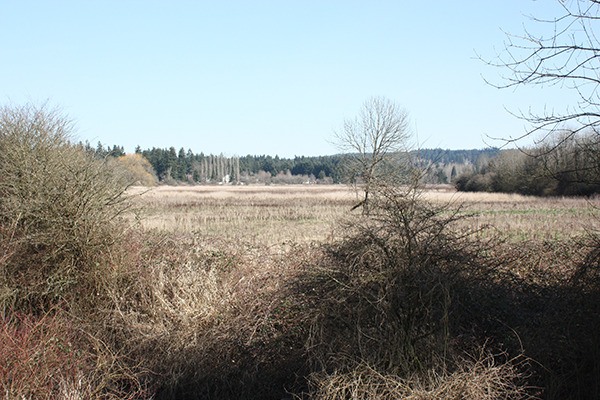
After a number of years of interest, the City of Redmond has purchased an 83-acre parcel of floodplain located to the northwest of Bear Creek and east of Avondale Road.
The sale went through at the end of January and the property — known as the Keller Farm — represents the largest piece of undeveloped land in Redmond, adjacent to Bear Creek.
A FAMILY FARM

Prior to the sale, the land had been owned by the Keller family since the early 1880s, according to an informational plaque on the property. The farm was started by Morris Joseph Keller, who went by Joseph, after he married Helen Woodin — of the pioneering family who founded Woodinville. The couple settled on the 160-acre piece of land, originally a homestead. This meant it was given free to anyone who was willing to farm it, said Al Keller, one of Joseph and Woodin’s grandsons and one of the four Keller siblings who sold the land to the city.
The property was passed down to Joseph and Woodin’s eldest son, Al’s father Ralph, and then passed down to Al’s eldest brother Fred. Their remaining two siblings are Dan and Marcia. With the exception of Fred, the remaining Kellers are scattered throughout the country.
“It feels really strange because the farm was always there,” Al said of selling the property.
The 83 acres acquired by the city represents what is left of the Keller property — except for about seven and a half acres in the northwest corner of the farm (near the intersection of Avondale Road Northeast and 180th Avenue Northeast), which remains in private ownership. According to a flier distributed by the city, 30 acres of Keller Farm were previously sold to the Washington State Department of Transportation for a mitigation project, which was completed in 2013.
Al, who now lives in California, called the farm a home base, saying he would occasionally bring his family up to visit.
And while it has been several years since he has lived up here, Al still remembers his days growing up on the farm. He said one of the first jobs they had as farm kids was feeding calves. Al also remembers the workhorses they owned when he was young as they did not have tractors until later.
“Like pictures I’ve seen of German peasants in the 1930s, we used wooden sleds on which to pile the hay high, pulled by a team of big bay horses,” he said.
Al said he also remembers having a victory garden during World War II and planting corn “Indian style,” with one fish under each mound of corn seed.
“Worked well!” he said about the technique.
RESTORATION WORK

Cathy Beam, a principal planner for the city, said the area is an ecologically important piece of land as it has been identified as critical in preserving and restoring the region’s environmental interests. She said acquiring the land is an opportunity for an ecological lift for the area, which will benefit the site as well as the watershed and Bear Creek.
Roger Dane, a senior planner for the city’s natural resources division, said Bear Creek is a significant area for salmon producing and the plan is to restore it to be more fish friendly.
Some of the steps they plan to take, he said, include redirecting a hillside spring away from a roadside ditch. There are also plans to restore the area, which had been flattened to be used as a farmland, to a wooded area. Dane said they also plan to repair the buffer between the creek and the road. In addition, he said turning the land into a wooded area will re-establish shade over Bear Creek, cooling the water and making it more inhabitable by fish.
Beam added that another large job in the area’s restoration is removing invasive plant species such as blackberries and hemlock. Once those plants are removed, she said, they will be replaced with plants that are native to wetlands. Beam said the goal is to plant a variety of species for diversity.
To re-establish the farmland to its former wooded roots, Beam said the city has hired a consultant — Habitat Bank — to create a wetland mitigation bank on the property as well as to design, permit and install environmental enhancements on the area.
According to the city flier, the city will “have an opportunity to evaluate the proposed design as part of the permit review for the enhancement work.” The flier states that “Habitat Bank will be responsible for site maintenance starting summer 2015, and will maintain the site for at least 10 years after restoration work is complete to ensure establishment of the native plants.”
“This is a long process,” Beam said about restoring the floodplain.
She said it will take a few years before any actual work begins and before that happens, there will be a permitting process as well as opportunities for public input.
PRESERVING LOCAL WATERS
As a member of Water Tenders, a nonprofit organization formed about 25 years ago to ensure the Bear Creek basin remains intact and healthy, Susan Wilkins is excited about the sale.
“It’s really a big deal,” she said.
Wilkins, who lives in Redmond at the top of Education Hill, said the purchase of the property is another piece of the preservation puzzle for Bear and Evans creeks.
“It provides a buffer (for the creeks) from development on both sides,” she said about the city’s newly acquired property.
Wilkins said reverting the land to its natural state will be great for salmon, improve water quality and help with flood storage.
For Al, Bear Creek brings memories of his childhood. When he was a boy, he would build canoes to take up the creek, which would join the Sammamish River, connecting him to the world.
“Bear Creek ran through the farm, where we skinny kids swam and sometimes caught rainbow trout that we then were required to eat,” he said.
As strange as it may be to no longer have the farm in his family, Al said he is glad to know the city is planning to restore the area to help preserve the area creeks.
“I’m pleased by that,” he said.