AAA shares distracted-driving study with Redmond Rotary
Published 4:09 pm Thursday, April 2, 2015
For many people, driving is part of everyday life.
They use their vehicles to get to and from work, school and any other errands they might have during the day. As a result, driving can get routine, making it easy to get distracted.
Kirk Nelson, president and CEO of AAA Washington, said distractions can range from talking or texting on a cell phone, to listening to an audiobook, to talking to someone using a hands-free device.
DIFFERENT WAYS OF BEING DISTRACTED
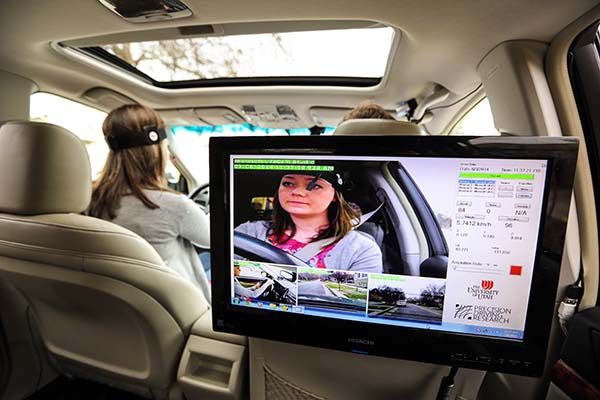
 These were all rated in a study on distracted driving that was conducted by the AAA Foundation, in conjunction with the University of Utah. Nelson, who shared some of the study results at a luncheon for the Rotary Club of Redmond on Thursday, said the distractions were placed into three categories: mild danger, moderate danger and high danger.
He said activities such as listening to the radio or an audiobook while driving fall under mild danger. Talking on a handheld cell phone or a hands-free device are moderate dangers, Nelson said, adding that with the latter, hands free does not equal risk free. And when it comes to texting or using voice-activated technology on phones or the car, he said those were rated as high dangers. Nelson said voice-activated technology was rated as a high danger due to the level of accuracy — or inaccuracy — of phones.
“(The message you are dictating) is not accurate and all of a sudden, your head is somewhere else,” he said about people trying to correct their messages.
When a driver is distracted, Nelson said they are affected in three ways — visually, manually and cognitively.
When someone is texting while they are driving, he said, all three areas are affected as their eyes are off the road, their hands are off the wheel and their minds are not focused on driving. Nelson added that if sending a text takes about five seconds, for someone driving 55 mph, they could travel about the length of a football field while not paying attention to the road. Basically driving while blindfolded, he said.
POTENTIAL FOR COLLISIONS
Tom Parsons, an officer with the Redmond Police Department’s (RPD) traffic division, said the type of collision they see the most in Redmond are rear-end collisions. And when they question drivers, he said, some will admit to being distracted before the crash — whether it was because they were on a cell phone, changing the radio station, fiddling with a GPS unit or anything else that would take their mind off the road. But not everyone admits to being distracted after an accident, so Parsons said the number of rear-end collisions caused by distracted driving is probably higher than what is recorded.
Parsons said people can run red lights or speed if they are not paying attention, which could lead to more serious collisions.
CITATIONS

In addition to potential collisions, distracted driving can also result in a driver being cited.
Parsons said the City of Redmond has an inattentive driving municipal code that allows police to pull someone over who is not paying attention while they are driving. Although, he added, in order for them to be able to pull someone over for this, there has to be some sort of vehicle movement or non-movement such as swerving or remaining stopped at an intersection after the traffic light has been green for some time. Parsons said a person can be doing a number of things to be inattentive such as the previously mentioned activities.
Specific to cell phone use, he said talking on a cell phone — with the phone to your ear — is a primary offense in Washington.
“If we observe that, that’s all we need to see,” Parsons said, adding that if a driver is using the speaker function of a phone and holding it in front of their mouth, that is OK.
Drivers can be cited for texting while driving, as well, he said, and when officers are on motorcycles, they can maneuver themselves and see more easily if someone is doing that. However, Parsons said, drivers could be doing other things on their phones such as looking at email or Facebook or changing the radio station on their Pandora. Currently, he said, this is not a traffic violation as the law is written specifically about texting.
“It causes a big gray area,” Parsons said. Although he added that the state legislature is currently looking at a bill that could make it illegal to manipulate your cell phone in any way.
Targeted enforcement of distracted and inattentive driving is something RPD traffic officers do on a daily basis, Parsons said, because it is so widespread. And in his experience, violators represent every demographic and age group.
“It is all over,” he said.
Parsons said he sees a lot specifically in the Avondale corridor and along Willows Road and Redmond Way. But these thoroughfares also have higher volumes of traffic compared to more residential areas.
TIPS AND ADVICE
Some tips Parsons had for drivers to avoid being distracted include planning ahead. He said drivers should make sure to have their bluetooth device connected to their car so they are not taken off guard if they do receive a phone call. He also advised drivers not go searching for their phone if they hear it ringing.
People can also plan to just not use their phone while driving, Parsons said.
Nelson said for parents, modeling safe driving for their kids and teen drivers (or future drivers) is also important.
He said one thing drivers can do is put their phones somewhere they cannot reach or hear it so they will not be distracted if they get a call or message.
Other passengers in the car can also be distracting, so if a conversation or child’s tantrum calls your attention from the road, pulling over can help.
Nelson said you should also try not to be a distraction, as well.
“Don’t call someone when you know they’re driving,” he said.