Bear Creek graduate, Sammamish resident receives Fulbright grant to teach in Brazil
Published 2:08 pm Wednesday, June 3, 2015
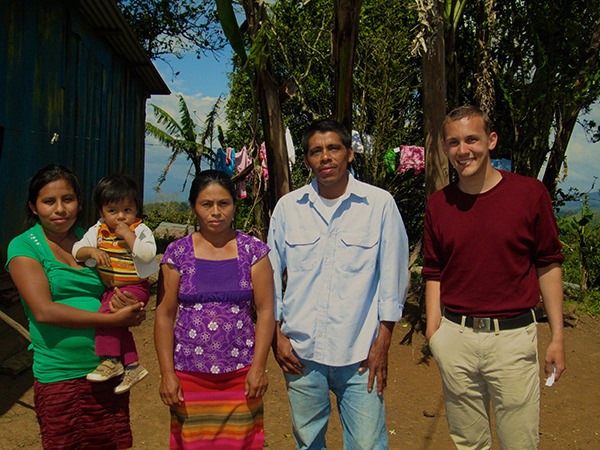
Cameron Kesinger will be the first person to admit that growing up in Sammamish, he did not know much about the world.
It wasn’t until he enrolled in the Advanced Placement European History class at The Bear Creek School in Redmond and joined the school’s forensics (debate) team — where one topic of debate revolved around Somali pirates — that his horizons began to broaden.
This led to the 2011 Bear Creek graduate — who is now 22 — to major in international studies and minor in Hispanic studies at Macalester College in Minnesota.
While he was there, Kesinger worked with one of his professors, helping refugees who were seeking asylum in the United States. He also worked for The Advocates for Human Rights, a nonprofit based in Minneapolis that implements “international human rights standards to promote civil society and reinforce the rule of law,” according to its website. With this organization, Kesinger also worked with asylum seekers.
It was this work with immigrants — most of whom were from low-income backgrounds — and the injustices he witnessed that led Kesinger to choose migration as his specialty in international studies.
“I saw some really terrible things,” he said, giving the example of children who were rushed through the deportation process with minimal explanation of what was happening to them. “It’s been very world-view shifting.”
TAKING THINGS ABROAD

In the last year or so, Kesinger has put his interest in international studies to practical use — studying abroad in Nicaragua and Cuba last spring and spending last summer in Hong Kong teaching English. And come next year, he will be adding at least one more stamp to his passport as he will be going to Brazil as a Fulbright scholar.
The Fulbright Scholar Program is an exchange program sponsored by the U.S. Department of State, Bureau of Educational and Cultural Affairs and awards about 8,000 grants every year to both American and foreign students as well as American scholars, visiting scholars, teachers and professionals. The program was established in 1946 and named for former Sen. J. William Fulbright of Arkansas, with the goal of increasing mutual understanding between the people of the United States and the people of other countries.
As a Fulbright scholar, Kesinger will spend nine months in Brazil, starting in March 2016, teaching English and helping professors at public universities. He will be working about 20-25 hours a week and as stipulated by his grant, will spend another 20-25 hours a week somehow engaging with the community. He said this could be through taking classes, volunteering or an independent project.
Kesinger is leaning toward either volunteering or an independent project.
With volunteering, he said there are a number of non-governmental organizations in São Paulo (he won’t know where in Brazil he will be staying until fall, but this is where he would like to end up) that work with children, economic development or migrant populations. If he were to do an independent project, Kesinger said he would like to examine the population of undocumented immigrants from Bolivia in the country and study the local attitudes toward this people’s migration to Brazil.
SLOW TO PROCESS
Kesinger first began considering applying for the Fulbright program last summer and started the process in September 2014. He described it as “quite frantic” as he only had a few weeks to fill out the application, secure letters of recommendation and prepare for an interview. In January, he received notice that he had passed the first stage in the process but didn’t get his hopes up as he knew people who had reached this point, as well, but did not end up receiving the grant. Kesinger was notified in March that he had received the grant and he said it took a few days for him to absorb the news and realize, “(he) really got this.”
“It didn’t really hit me at first,” he said.
A THIRST FOR KNOWLEDGE AND SOCIAL JUSTICE

Rob Sorensen, who teaches Western civilization and art history at Bear Creek and has known Kesinger since he was in ninth grade, said he is not surprised Kesinger received the grant.
“He’s exactly the kind of person that I would be happy to see taking the reins of leadership for the next generation,” Sorensen said about Kesinger.
Sorensen, who also coaches Bear Creek’s forensics team, said Kesinger was a joy to teach, describing him as “smart and inquisitive” and “particularly excellent in class discussions.”
“Unlike a lot of my students, he never seemed to be too concerned about grades or whether he was preparing for a career — he simply seemed to want to learn,” Sorensen said. “He was also — from the start — incredibly compassionate and a bit idealistic. And I think it is this combination of idealism, compassion and love of learning for its own sake that makes him the perfect choice for an award like the Fulbright.”
Gabriela Llanos, who had Kesinger in her Spanish class at Bear Creek, added that over the three years that she taught Kesinger, she saw some dramatic changes. She said initially, he was an introvert who was quiet and shy. But over time, he became passionate about learning another language and his desire to know more about other cultures and people became evident.
“I put him in contact with a school in Uruguay, where he spent a month involved in a service project, helping build a school in a very remote and poor area,” Llanos said. “Upon his return, I met with Cameron several times, this time I met a completely different young man. He had become confident, he had strong opinions about social justice, he was eager to move to other countries to work in places of need.”
Kesinger said he is still not sure exactly what he wants to do in the future but mentioned law school as a possibility as well as working in youth development.