Redmond bakery owner, Microsoft worker who both grew up in Paris discuss attacks
Published 10:29 am Tuesday, November 24, 2015
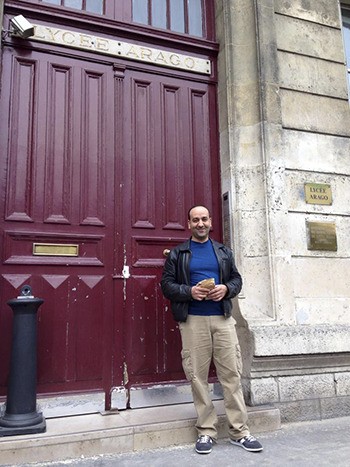
On Nov. 13, Khalid Kaskou was listening to the French soccer match against Germany when he learned about the explosions just outside of the Stade de France — the French national stadium.
The radio announcers initially thought the explosions were fireworks, but Kaskou learned shortly that French President François Hollande had been removed from the stadium.
“It was pretty confusing,” Kaskou said. “Nobody knew what was happening.”
It wasn’t long after that moment that he and the rest of the world learned that the explosions were part of multiple, simultaneous attacks in Paris that left 130 people dead.
CLOSE TO HOME
Kaskou, who owns the Belle Pastry bakeries in Redmond and Bellevue, grew up in Paris and still has family and friends living in the area. He and one of his sisters — Nadia — live on the Eastside, but he said their mother, other sister and youngest brother still live in Paris. In addition, Kaskou said he has a friend who lives very close to the city’s 11th arrondissement, or district, near the Bataclan theater. This was where terrorists took concertgoers attending an Eagles of Death Metal show hostage and in the end, killed 89 people.
Fortunately, all of their family and friends are OK.
Kaskou, who moved to the United States in 2009 and lives in Bellevue, said his family is from Paris’s 12th arrondissement. He said they live only a few blocks away from the Jewish grocery store that was the site of a siege following the Charlie Hebdo attacks in January.
“We all know these places,” Kaskou said about his familiarity with the points of attack, adding that the Bataclan was one of his favorite places to go on Friday and Saturday nights.
For Olivier Fontana, the confusion and worrying about loved ones was not that different once he learned about the Paris attacks.
Both he and his wife are originally from Paris and now they live in Issaquah. Fontana works at Microsoft in Redmond.
Like Kaskou, both Fontana and his wife still have family and friends in Paris or the Paris suburbs. Fontana said they were able to get a hold of everyone and they’re OK.
“It was reassuring,” he said, adding that his brother lives very close to one of the areas hit, but fortunately, he was out of town at the time of the attacks.
HEIGHTENED SECURITY
Both Kaskou and Fontana have visited Paris following the Charlie Hebdo attacks — Kaskou in June, Fontana in July.
Kaskou said while he was there, he noticed more soldiers patrolling the streets and working with the police. But while this was the case, he felt terrorism was not a high concern for people. This may have been because the January attacks had a specific target — whereas this month’s attacks were random and had no particular target, Kaskou said. The mentality behind them was to just scare people.
Following these recent attacks, attitudes and concerns are different.
“We could sense (our family and friends) were really worried and everyone’s shocked,” Kaskou said about his phone calls home.
He added that his friends in other parts of Europe realize something similar can happen to them, adding to the fear.
When Fontana visited Paris in July, he said he stopped by a little grocery store that was located in front of one of the restaurants that was hit two weeks ago. Like Kaskou, he said security and police presence was higher than he had experienced previously, but it wasn’t to the point of a state of emergency.
Fontana has been hit with a maelstrom of emotions when thinking about his homeland and hometown being the target of terrorist attacks: fear, hurt, upset and frustration. He said the latter has been the result of constantly asking, “What can I do?”
COMING TOGETHER AS A COMMUNITY
Fontana is the president of Union of French Expatriates (UFE) Seattle, a not-for-profit, apolitical and non-religious organization whose goal is to welcome and support the French and French-speaking community in the Puget Sound area.
Following this month’s attacks as well as the attacks in January, UFE Seattle organized gatherings for the local community to be together and show their support for those in Paris. The most recent gathering was Nov. 14 at La Parisienne French Bakery in downtown Seattle.
Fontana said following the attacks, the local French community has received a lot of support from each other as well as others. From the Space Needle flying the French flag to neighbors bringing them cookies and flowers, those outside of the French community have been showing that they care, he said.
Kaskou echoed this, saying customers have been coming into the bakeries asking after his family and friends back home.
“It means a lot,” he said about their concerns.
In addition to these gestures of support, Fontana said by the Monday following the attacks, the “French attitude” began taking over, meaning humor. He said he was seeing people using humor in comics and social media to heal and move forward.
“That’s the French way,” he said, explaining it’s a hundred-plus-year tradition. “We just make fun of everything.”
Eventually that humor began to make its way across the Atlantic to here in the United States, Fontana said.
And in the face of these hardships, he pointed out Paris’s motto: “Fluctuat nec mergitur,” a Latin phrase that means, “Tossed but not sunk.” Fontana said this just means the French have faced a lot of things in its history and these attacks will not bring Paris or France down.
EMPATHY FOR OTHERS
Despite seeing their hometown under attack, neither Kaskou nor Fontana think countries should stop letting in Syrian refugees.
Kaskou said these people are leaving everything behind and in many cases, it is a matter of life or death.
Fontana said, “dumb doesn’t even capture it,” when it comes to some people’s attitudes toward keeping out Syrian refugees. He said he and his wife are proud of Washington Gov. Jay Inslee for welcoming the refugees, adding that the French government will still take in Syrian refugees despite the recent attacks the country has seen.
These people are escaping war, Fontana said, and turning them away is just making generalizations about a group of people.
Kaskou said the same thing about Muslims. There are about 4 million to 5 million Muslims living in France and Kaskou said it is already tough enough to be of that faith in Europe. This month’s attacks in Paris have just added more tension to cross-cultural relationships.
“They don’t need that now,” Kaskou said about the attacks and added tensions.