City continues with plans to restore Keller Farm floodplain
Published 10:18 am Friday, August 7, 2015
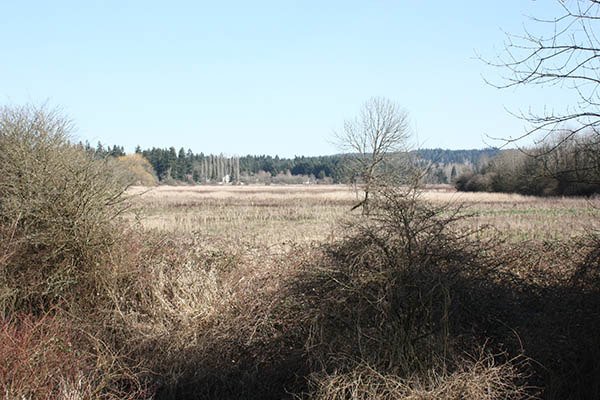
Progress on the City of Redmond’s plan to restore the Keller Farm wetland continues as the project’s prospectus — or plan — is now officially under review.
In late July, the U.S. Army Corps of Engineers and the Washington Department of Ecology issued a Joint Public Notice for the Keller Farm wetland mitigation bank proposal. This is the first step toward agency review and approval of the proposed mitigation bank under the State of Washington Wetland Mitigation Banking Rule.
At the beginning of this year, the city purchased about 83 acres of floodplain on the Keller Farm for $2.2 million to facilitate environmental restoration. The area in question is located north and west of Bear Creek and east of Avondale Road.
Since that purchase, principal planner Cathy Beam said the city has worked with a consultant — Habitat Bank LLC — to create a state-certified wetland mitigation bank on the property.
Roger Dane, senior planner for the city, said this mitigation bank will allow development projects in the area to earn mitigation credits if they are unable to do the mitigation work onsite.
Beam said there is a fee set that allows developers to purchase into the project. And as a result, she said, the city will be able to recoup the money spent when they purchased the property.
Beam said with 83 acres, the project is “quite an undertaking.” However, despite how big the job is, things have been going quite smoothly so far.
Dane credits Habitat Bank for this and said it demonstrates the good relationship the firm has with the state.
As previously reported in the Redmond Reporter, Habitat Bank will create a wetland mitigation bank on the property as well as design, permit and install environmental enhancements on the area. According to a press release issued by the city, Habitat Bank will be responsible for site maintenance, and will maintain the site for at least 10 years after restoration work is complete to ensure the establishment of the native plants.
“This action signifies the start of the process towards a large environmental restoration project on the Keller Farm,” said Redmond Mayor John Marchione in the press release. “We are very excited to see the project come to fruition.”
Currently, the prospectus is available for the public to review in the Development Services Center at Redmond City Hall and can also be downloaded at tinyurl.com/pfqqmno.
In addition to the current public review and commenting period, Beam and Dane said the prospectus will undergo an extensive review process with a number of agencies, including the U.S. Army Corps of Engineers and Department of Ecology, as well as the Environmental Protection Agency and local tribes. Basically, Beam said, any agency that has anything to do with permitting and/or water.
With so many people and agencies reviewing the plan, Beam said it will take at least a year before this step in the process is complete. She added that these groups also have other plans and documents to review, so there is no telling where in their queue the Keller Farm prospectus will be.
Once the prospectus is approved, a fully detailed plan will need to be developed and created. And then, she said, there will another year or so for the city to acquire the needed permits before any work can be done on the property. Beam said they estimate construction to begin around July 2017. And once the work is done, there is a bank monitoring period of 10 years to make sure it is doing what is intended. This sets project completion at 2029.
“We’re going to be in this process for a while,” Beam said. “It’s definitely a long-horizon project.”
According to the city press release, the conceptual goals of the mitigation bank are to: Restore wetland hydrology and create a variety of wetland hydroperiods (seasonal patterns of ponding depth and duration); re-establish native plant species richness and structural diversity in wetlands, project buffers and riparian areas; reconnect segments of Bear and Perrigo creeks with their floodplains and re-establish channel complexity; increase habitat structure, function and complexity; and improve water quality in wetlands and creeks.
The project also proposes to establish off-channel rearing and refuge areas for salmonids and relocate a segment of Perrigo Creek from a straightened ditch.
Preservation of this portion of the Keller Farm complements a 30-acre mitigation project completed by the Washington State Department of Transportation (WSDOT) in 2013 (immediately east of Bear Creek).